Penetrating Damp
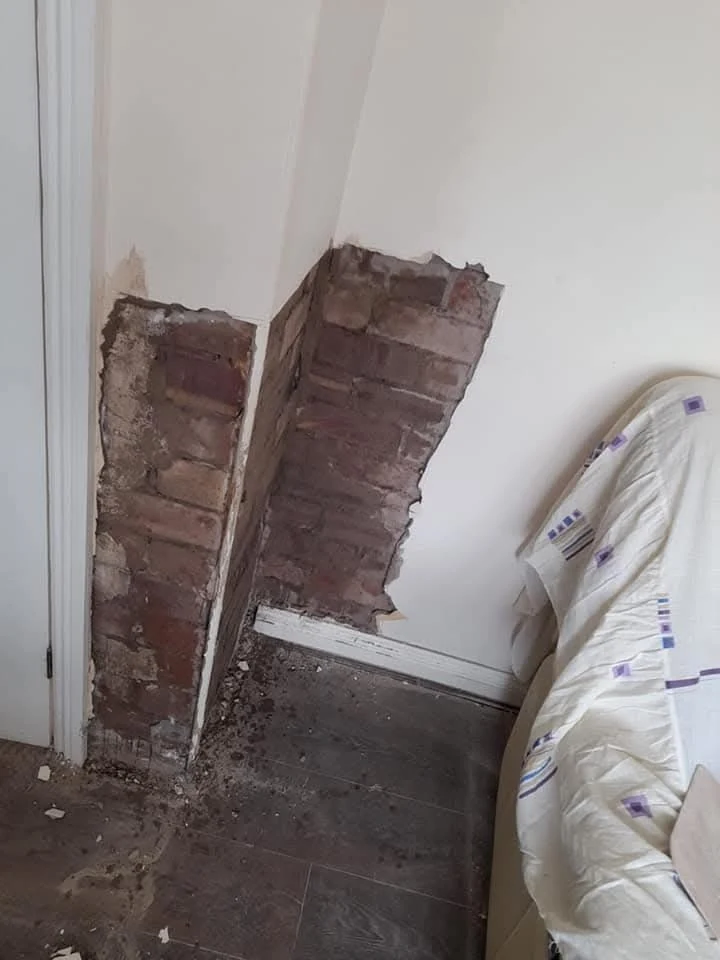
A damp patch that appeared after last week’s rain. A dark stain spreading across the chimney breast. Wet plaster on an external wall that dries out, then comes back. These are the signs of penetrating damp.
Newcastle Barrier Damp Proofing surveys properties across Tyne & Wear, Northumberland, and County Durham. Penetrating damp is one of the most common problems we find in North East housing stock. It is also one of the most misdiagnosed.
The cause comes from outside, so that is where the fix must start.
Book your free survey. Our surveyor will tell you exactly what is driving the damp. If the cause is simple, we will tell you that too.
Real Photos From Recent Newcastle Jobs
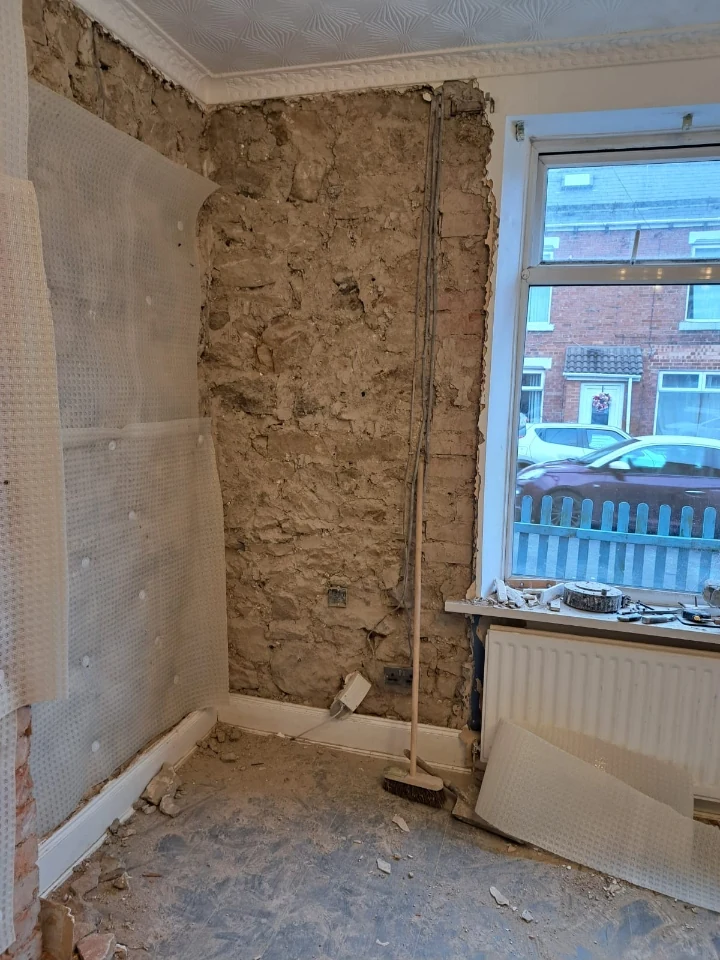
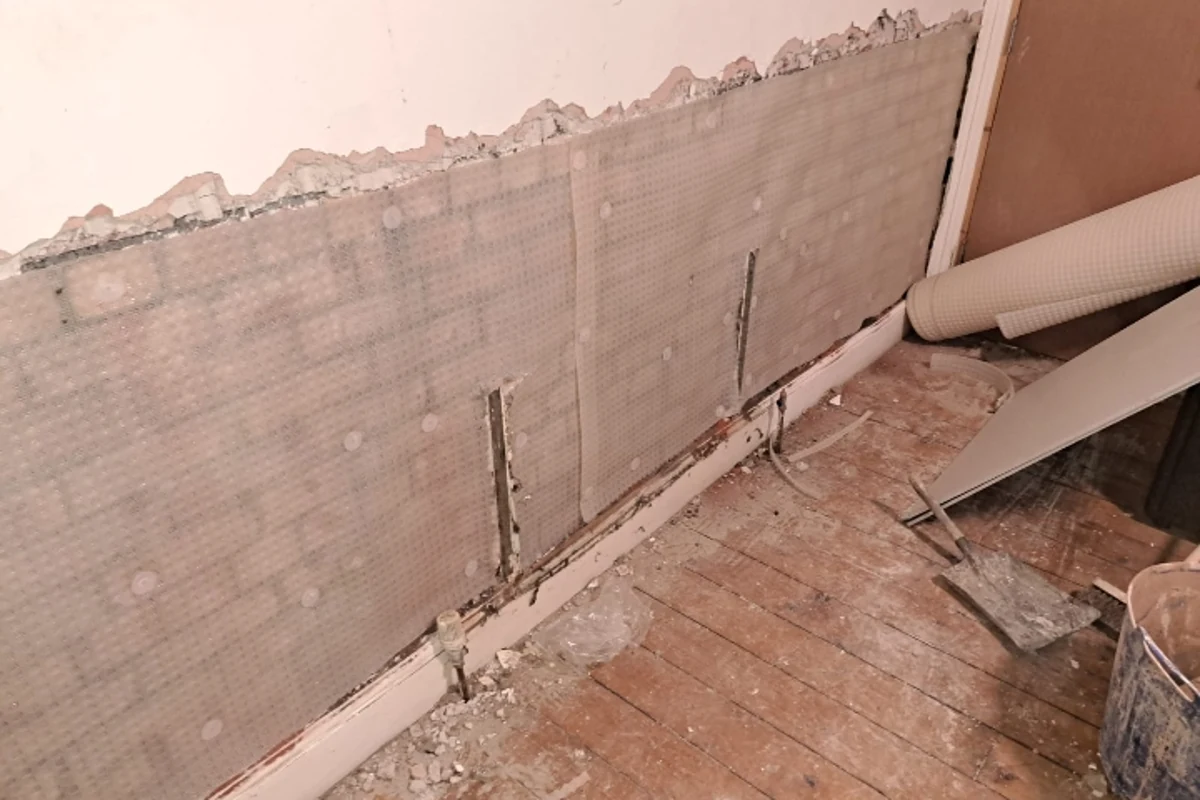
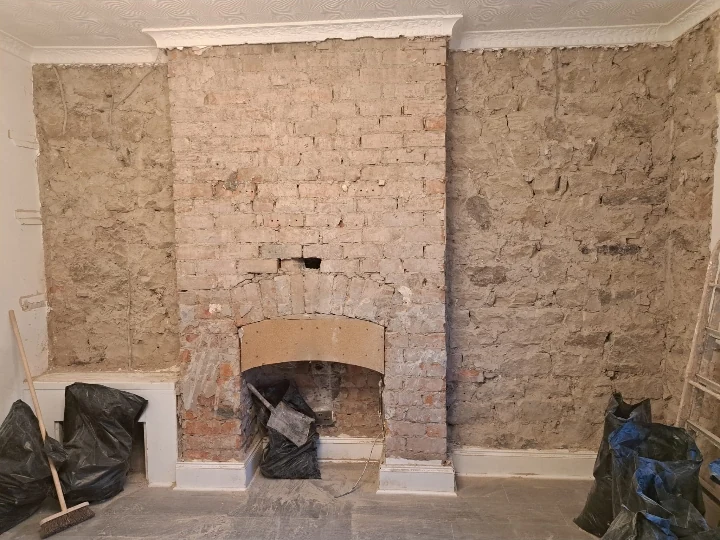
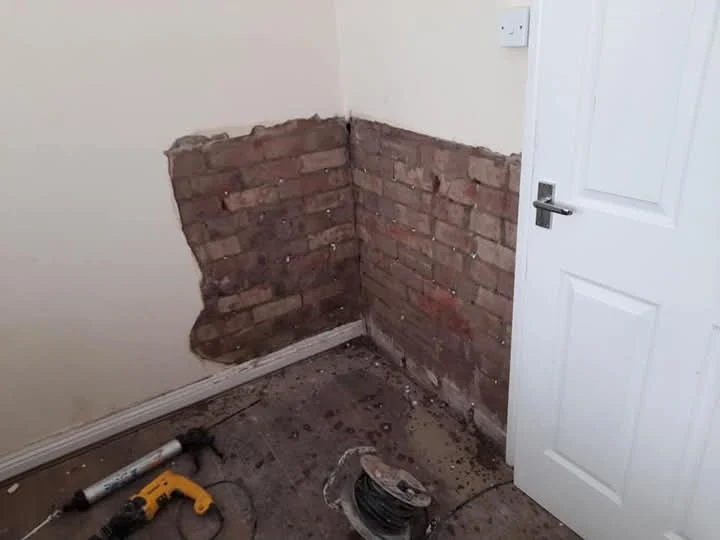
Strip-out of a saturated wall, revealing the full extent of penetrating damp.
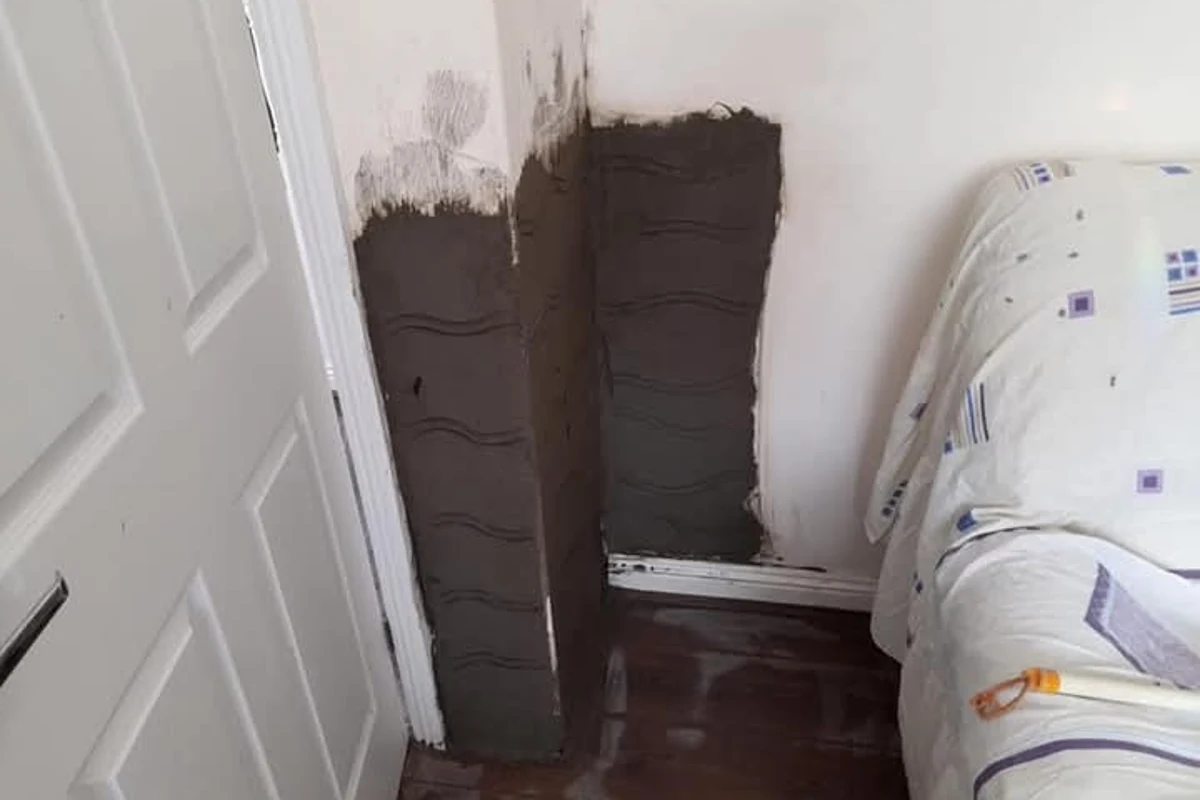
Waterproof render applied after the external defect was repaired.
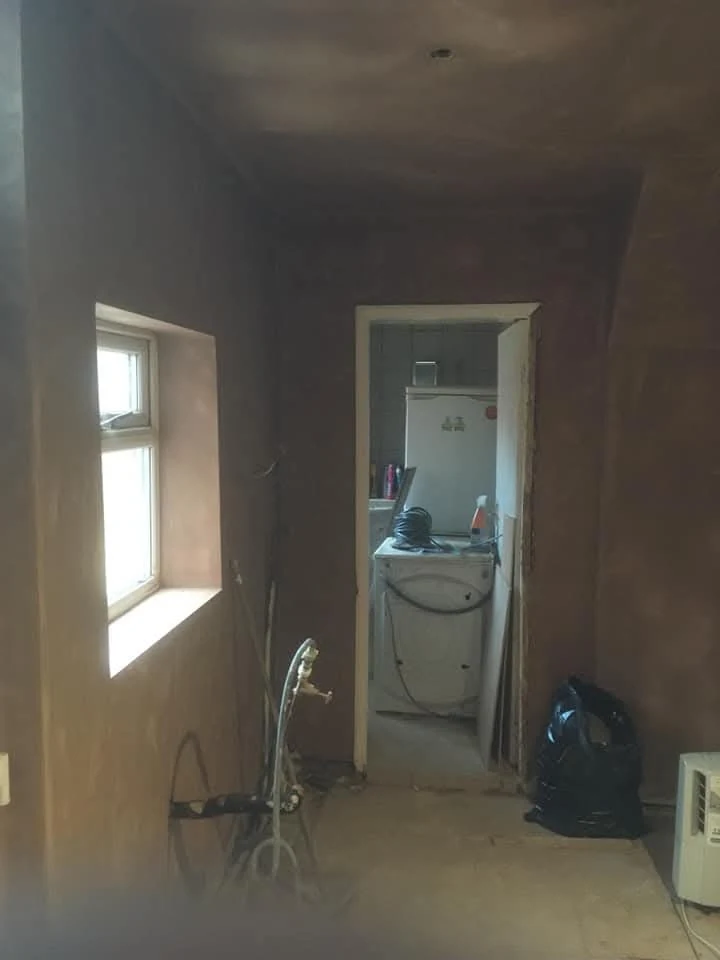
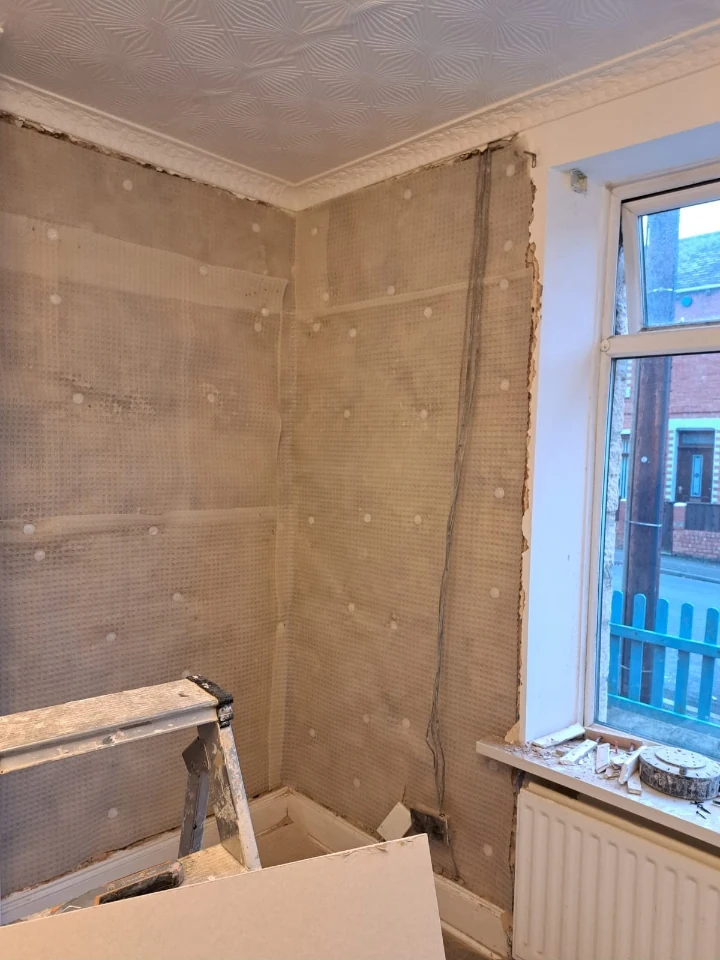
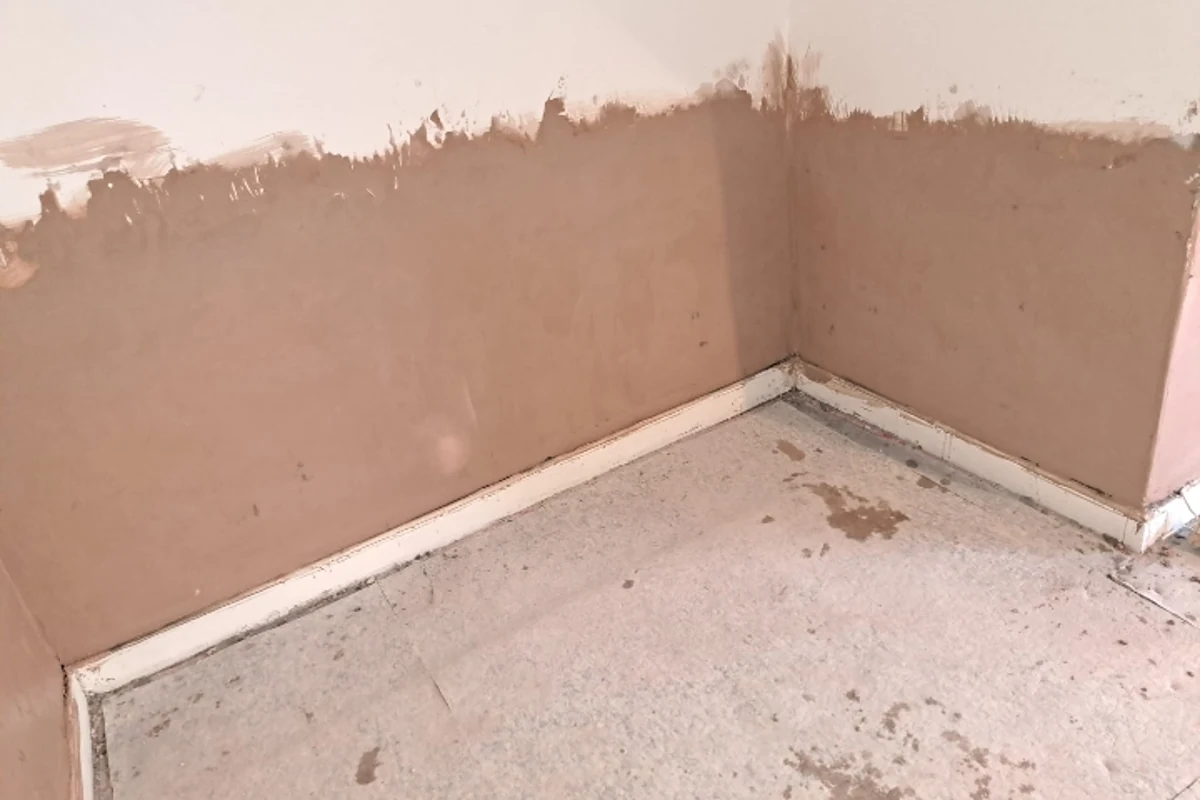
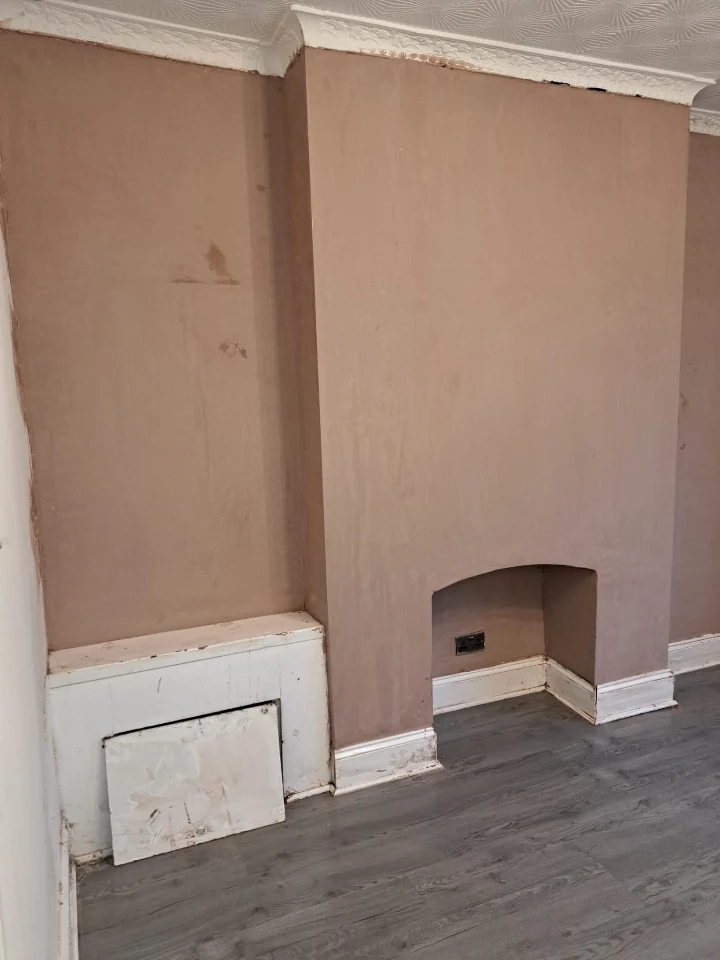
Replastered hallway wall after penetrating damp was resolved at source.
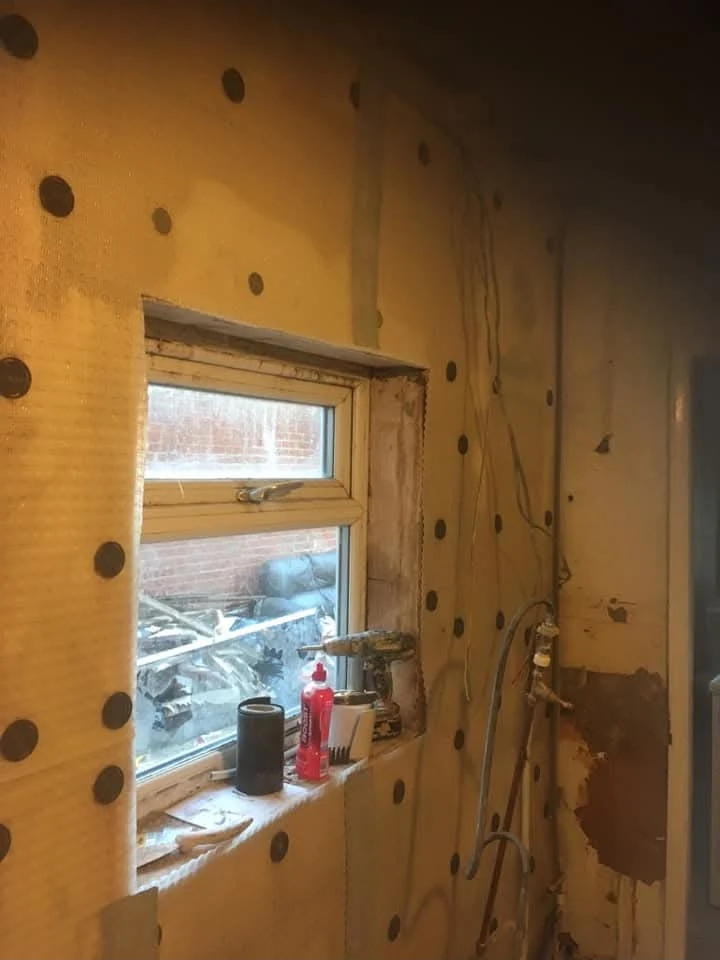
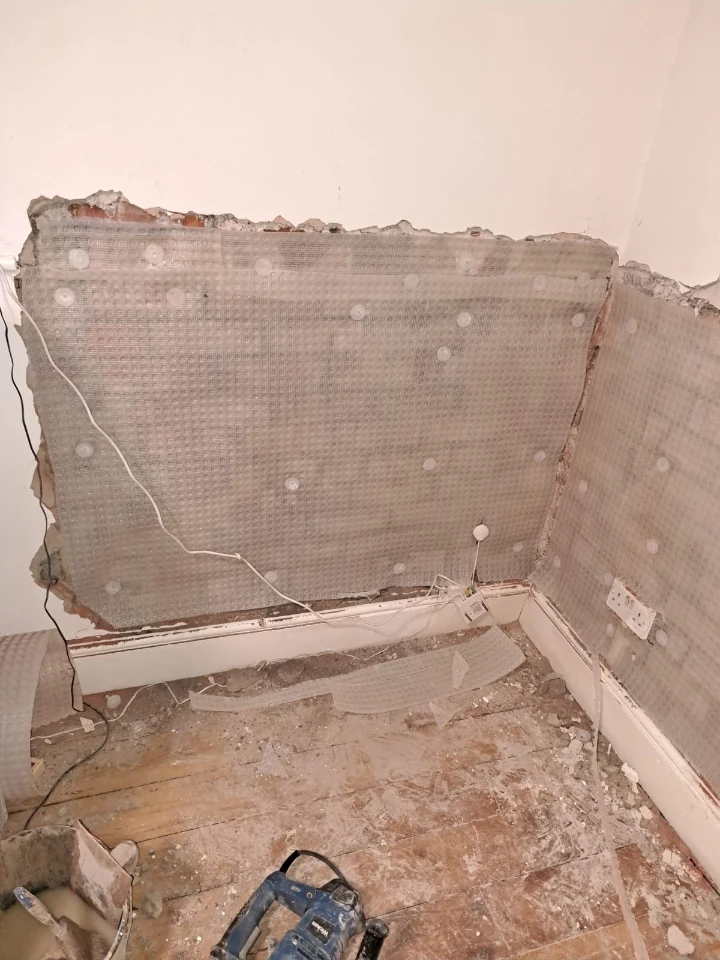
Membrane fitted around a window reveal where water was entering the wall.
What penetrating damp is
Penetrating damp is water entering a building through the external fabric. It passes through walls, around window frames, over parapets, or down chimney stacks.
Not the same as rising damp
It is not the same as rising damp, which travels upward from the ground. Penetrating damp can appear at any height, including upper floors and chimney breasts.
Weather tells you which it is
A patch that grows during rain and shrinks in dry weather is almost always penetrating damp. A patch that stays roughly the same size regardless of weather is more likely condensation or a bridging fault.
Get your free damp survey
A clear written report and honest advice, with no sales pressure.
Visible signs of penetrating damp
Patches that appear or spread after rain
The dampness tracks weather directly. The wetter the weather, the larger the patch.
Damp on chimney breasts
A chimney stack is exposed on three or four faces. Failed flashing or cracked pointing drives water straight down into the breast.
Isolated damp on exposed walls
Gable ends and front elevations facing the prevailing weather are first to show it.
Tide marks that shift position
Unlike rising damp, the wet zone moves up and down with rainfall.
Paint bubbling or plaster blowing on a single wall
The rest of the room is dry. The damage is localised to the affected wall only.
Penetrating damp does not announce itself dramatically. It builds slowly, patch by patch, until the plaster is saturated.
Common causes in North East housing stock
Failed pointing
Victorian brick terracing across Newcastle and the inner suburbs carries mortar that is now more than a century old. Lime-based pointing weathers over decades.
When it crumbles, water enters the wall with every rain event. Tyneside flats have shared rooflines and party walls. Pointing failure on a jointly maintained surface leaves both properties exposed.
Cracked render
Post-war rendered semis across Gateshead and Sunderland develop hairline cracks as the render ages. Water sits in the crack, freezes in winter, and widens it. An ignored hairline crack becomes a visible channel into the wall within a season or two.
Leaking gutters and downpipes
A blocked or cracked gutter discharges water onto the wall below every time it rains. The brickwork below a leaking downpipe joint is typically the wettest section of a wall.
Raised ground levels
A path or driveway raised above the damp proof course line bridges that barrier. Water then enters the wall at low level, which is often misread as rising damp.
Solid-wall properties
Stone-built market towns in Northumberland, such as Morpeth and Hexham, have solid walls with no cavity. Solid walls rely entirely on the external face for weather resistance. When pointing fails on solid stone or brick, there is no air gap to interrupt the path of water.
Left untreated, penetrating damp softens plaster and can reach structural timber. Water in a timber void creates conditions for rot. Early repair is straightforward. Structural timber repair is not.
Not sure what is causing your damp?
Book your free damp survey. We aim to call you back the same day.
The honest fix path
1. Identify the entry point
Our surveyor traces the damp back to its source. We inspect the external envelope, including gutters, pointing, render, and ground levels, before forming any view.
2. Repair the external defect
The external cause is addressed first. That may mean pointing, new render, flashing repair, or gutter replacement. There is no point replastering a wall while the source remains open.
3. Allow the wall to dry
Once the source is sealed, the wall needs time to release stored moisture. We confirm dryness with moisture readings before any internal work begins.
4. Replaster once moisture readings confirm the wall is stable
Replastering begins only when readings confirm the wall has stabilised. This prevents new plaster from blowing and ensures the repair holds.
What to expect from our survey
Newcastle Barrier Damp Proofing sends an experienced damp surveyor, not a salesperson. The report describes what is there, not what produces the largest bill.
Damp proofing and replastering
Our damp proofing service covers internal membrane work and replastering where the wall has been saturated.
Repointing at the source
Our repointing service addresses failed mortar joints, one of the most common entry routes for penetrating damp in North East housing stock.
Written report, whatever we find
You receive a written report with moisture readings, whatever we find. If a blocked gutter is the only problem, that is what the report says.
Fixed-price quotation if needed
If replastering or other treatment is needed, you get a written fixed-price quotation before work starts. No variation orders. The price we quote is the price you pay.
Book your free survey. The photos above show real jobs from our recent Newcastle work.
Penetrating Damp FAQs
Get My Free Quote
Fill in the form below for a free quote: