Wall Tie Replacement in Newcastle
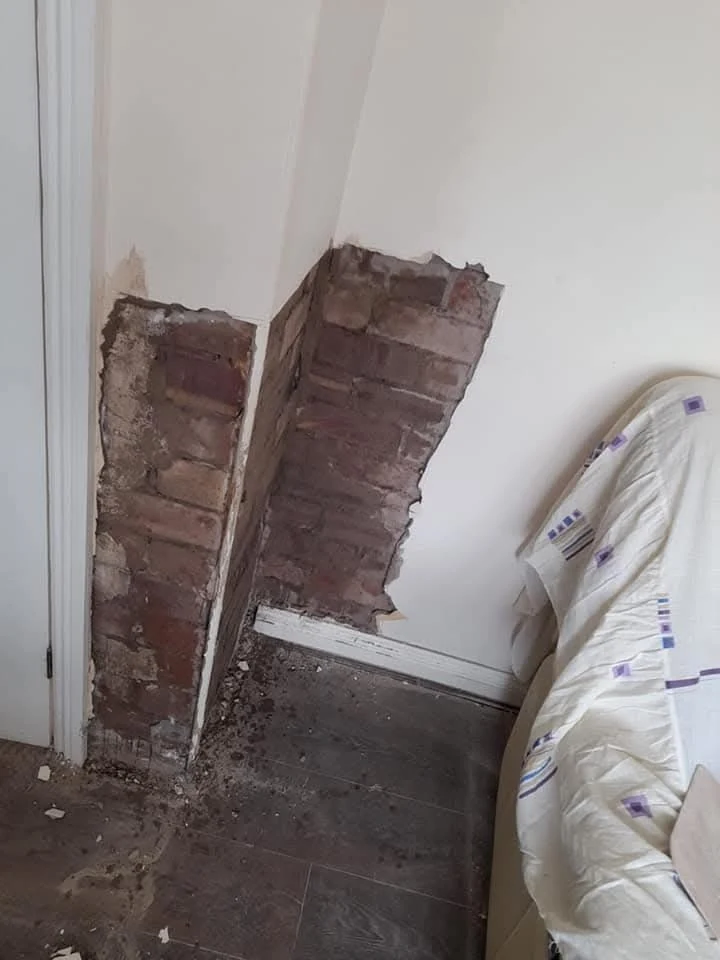
Horizontal cracks along the mortar beds of a cavity wall are often the first sign of a serious structural problem. Newcastle Barrier Damp Proofing inspects and replaces failed wall ties across Newcastle, Tyne & Wear, Northumberland and County Durham.
The inspection is free. If your wall ties are sound, you get a written all-clear and pay nothing. If replacement is needed, you receive a fixed-price quotation before any work begins.
Book your free survey and we will tell you honestly what the inspection finds.
What Wall Tie Failure Looks Like
Most homeowners have never heard of wall ties. They are the metal connectors set into the mortar joints of a cavity wall. They link the outer brick leaf to the inner structural wall.
Horizontal cracks
Horizontal cracks running along mortar bed joints at regular vertical intervals in the outer brickwork are the clearest early warning sign.
Bowing or bulging
Bowing or bulging in the outer brick face can appear even where the rest of the wall looks undisturbed.
Lifting or separation at corners
Lifting or separation at corners, where the outer leaf begins to pull away from the building, indicates the wall leaves are no longer structurally connected.
Staircase cracking
Staircase cracking at the corners of window and door openings in the outer leaf is another pattern that warrants investigation.
None of these patterns is exclusively caused by wall ties. Other structural problems can produce similar cracking. For cavity walls built from the 1920s to the late 1970s, horizontal cracking in the outer leaf warrants investigation. Do not assume it is cosmetic.
Why This Matters Structurally
The outer leaf of a cavity wall is not designed to stand without lateral support. The wall ties are that support. When enough ties fail, the outer wall carries wind load and frost pressure with no structural connection behind it.
Rapid deterioration
Left uncorrected, a bowing outer wall can deteriorate rapidly. Tyne & Wear and Northumberland receive significant cold, wet weather through the autumn and winter months.
Frost damage
Frost expands water in open cracks. Each freeze and thaw cycle widens the movement.
Minor to significant movement
What looks like minor cracking one season can become significant movement the next.
The cost of remediation rises significantly once the outer leaf has moved out of plumb. Addressing wall tie failure before the wall has shifted keeps the job contained and the cost manageable.
Get your free damp survey
A clear written report and honest advice, with no sales pressure.
Which Properties Are Most at Risk?
Cavity wall construction became standard in UK housebuilding from around the 1920s. The original wall ties were made from mild steel or iron. These corrode over time, particularly in damp or exposed locations.
Interwar and post-war housing
Properties built between roughly the 1920s and the late 1970s carry the highest risk. The interwar and post-war housing stock across Tyne & Wear and Northumberland falls squarely into this window.
Solid-wall terraces
Victorian and Edwardian terraces in inner Newcastle and parts of Gateshead are often solid-walled construction. They do not have wall ties.
Later tie materials
Galvanised steel ties introduced from the 1970s have better corrosion resistance. Stainless steel ties have been standard since the 1980s. Properties built before that change are the most likely to have failing ties.
Any cavity wall house with original mild steel ties is worth inspecting once it reaches 30 to 40 years old.
Not sure what is causing your damp?
Book your free damp survey. We aim to call you back the same day.
How Wall Tie Inspection and Replacement Works
1. Locate the ties
Our surveyor locates tie positions using a metal detector. Where necessary, small core holes are drilled to allow direct inspection.
2. Assess the failure
The number of failing ties and the pattern of failure determine whether targeted replacement or full remediation is needed.
3. Install replacement ties
Replacement ties are drilled through the outer leaf and fixed into the inner leaf. The correct vertical and horizontal spacing is observed throughout.
4. Remove failed ties
Failed original ties are ground off flush or removed.
5. Fill and point
The drilled holes are filled and the mortar joints are pointed on completion. Our repointing service covers any open joints that need sealing after structural work is complete.
6. Written report
You receive a written report after the inspection. Our damp survey page explains how every structural inspection we carry out is documented and reported.
Wall Tie Replacement FAQs
Get My Free Quote
Fill in the form below for a free quote: