Woodworm Treatment in Newcastle
Newcastle Barrier Damp Proofing surveys and treats woodworm across Newcastle, Tyne & Wear, Northumberland and County Durham. If you have found flight holes in your timber, the first question is whether the infestation is still active.
Not all flight holes mean active woodworm. Many infestations found in older properties are historic. Applying chemical treatment to dormant timber is expensive and unnecessary.
Book a free survey and we aim to call you back the same day. Our surveyor will tell you honestly what the evidence shows.
We check whether you actually need treatment first
Most firms that survey woodworm also sell the treatment. That is a direct conflict of interest. We answer it through what you leave with.
Written report after every visit
You receive a written survey report after every visit, whether the infestation is active or long since finished.
If the infestation has died out and your timbers are sound, we say so in writing. There is no charge.
Survey-first, always
We do not recommend treatment until the survey confirms an active infestation. The written report tells you exactly what was found.
Newcastle Barrier Damp Proofing covers the whole of Tyne & Wear, Northumberland and County Durham.
What active woodworm can do to a building’s structure
The common furniture beetle is responsible for most woodworm infestations in UK homes. The larvae bore through timber as they develop, feeding on the wood fibres. Individual flight holes look minor.
Load-bearing capacity at risk
An active infestation across roof trusses, floor joists or structural beams can reduce load-bearing capacity. Left unchecked, the damage accumulates.
Older Newcastle properties at risk
Older Newcastle properties often carry beetle activity in loft spaces or sub-floor voids that go unnoticed for years. Untreated active infestations do not resolve on their own.
Woodworm and timber rot often found together
Woodworm is often found alongside dry rot and wet rot in damp timber. Beetle larvae prefer timber that is slightly moist.
If woodworm is present, checking for fungal decay at the same time is a practical step.
Structural timber repair is not cheap. A single compromised floor joist costs far less to treat early than to replace after the damage has spread.
Get your free damp survey
A clear written report and honest advice, with no sales pressure.
How we tell an active infestation from a historic one
This distinction is the most important part of any woodworm survey. Many infestations found during property surveys are historic. The beetles completed their life cycle, emerged and moved on. The flight holes remain, but the active threat is gone.
Fresh frass
Frass is the fine, cream-coloured powder that larvae produce as they bore through timber. Fresh frass is pale and loose.
Old frass is grey, compressed and settled. Frass around or below flight holes suggests activity is ongoing.
New exit holes
New exit holes have clean, bright edges. The wood around a fresh hole looks undarkened.
Older holes have darkened edges from years of exposure, handling and cleaning.
Active larvae or adult beetles
Common furniture beetles emerge between April and September. Outside this window, adult insects are harder to find, but frass and hole condition remain readable year-round.
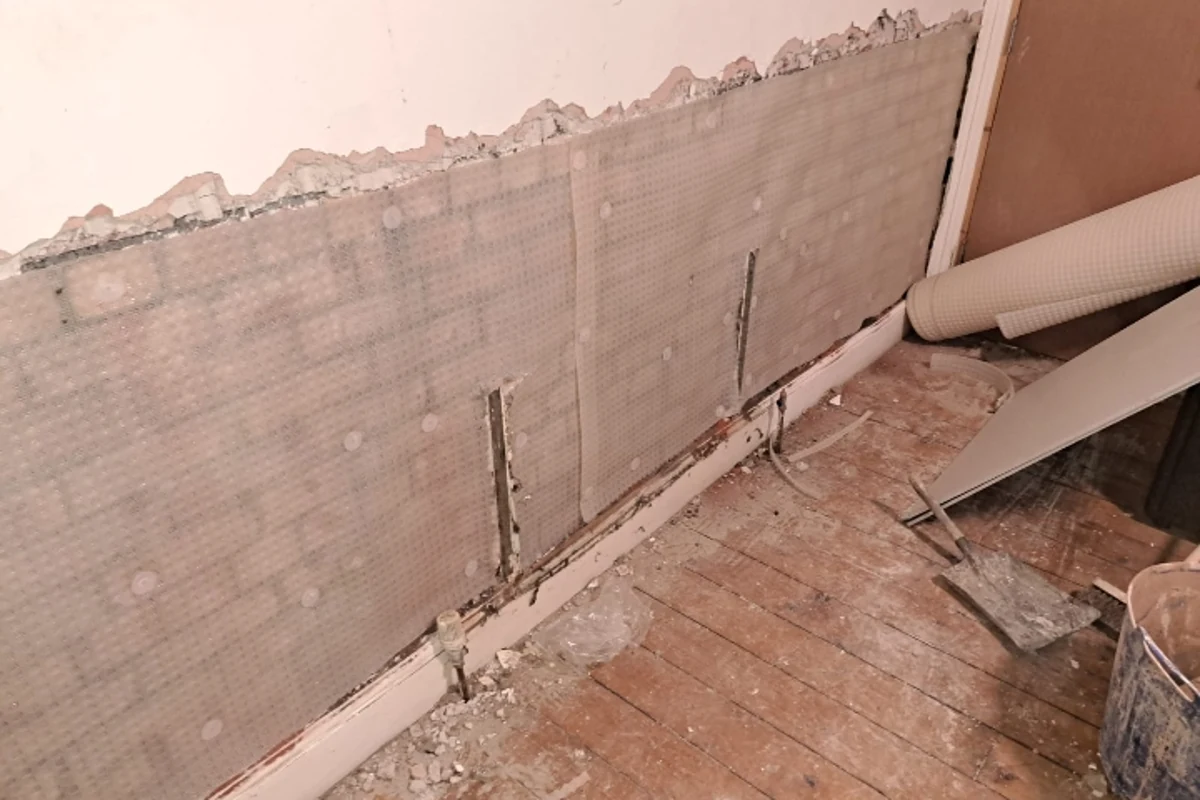
Our surveyor inspects the affected timbers directly, checks for these active signs and tells you exactly what the evidence shows. If there are no signs of current activity, we will tell you so clearly.
What treatment involves when active infestation is confirmed
If active woodworm is confirmed, we apply a low-odour, water-based insecticide to the affected timbers.
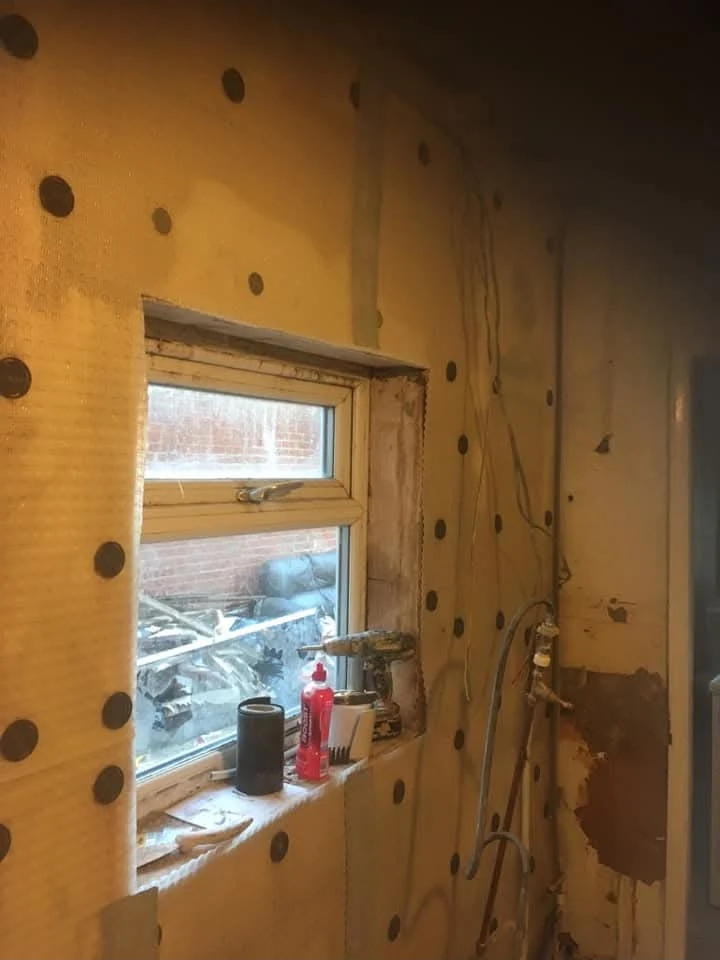
How the treatment works
The product penetrates the wood surface and kills larvae feeding within the timber. It also discourages adult beetles from laying eggs in treated surfaces during the next emergence season.
Access and completion time
Access to the timbers is required. For floor joists, this typically means lifting boards; for roof timbers, access comes from the loft.
We confirm access requirements at the survey stage. The treatment itself is normally completed in a single day. Treated spaces are usually usable again within 24 to 48 hours.
Address the moisture source too
Where nearby timber shows signs of moisture, our damp survey identifies the source. Damp timbers are more vulnerable to ongoing beetle activity.
Addressing the moisture source reduces the likelihood of re-infestation after treatment.
Not sure what is causing your damp?
Book your free damp survey. We aim to call you back the same day.
When chemical treatment is not the answer
Not every flight hole means a treatment programme is needed. Small areas of superficial damage in low-structural timbers can often be left alone.
Historic infestations confirmed in writing
If there are no active signs and no fresh frass, treatment is unlikely to be needed. Treating sound timber unnecessarily adds cost without benefit.
Survey-driven recommendation, always
Our recommendation is always based on what the survey finds. Where the infestation finished years ago and your timbers are sound, that is the written report you receive.
Arrange a free survey and we aim to call you back the same day.
Woodworm Treatment FAQs
Get My Free Quote
Fill in the form below for a free quote: